

Tool theft, fire, flood and accidental damage can wipe out thousands of pounds of business equipment overnight. The financial loss hurts, but many UK businesses discover the bigger problem afterwards, proving exactly what they owned to their insurer.
Insurance policies do not guarantee an instant payout. Most insurers require evidence of ownership, value and loss before settling a claim. Without a structured tool inventory for insurance claim purposes, many claims become delayed, disputed or reduced.
That is why serious contractors, trades and equipment-heavy businesses are moving towards digital asset registers using systems like KYNEKT’s inventory and tracking platform.
Do You Need a Tool Inventory for an Insurance Claim?
In practice, yes.
While policy wording varies, insurers commonly require proof that:
- The lost items existed
- You owned them
- They were worth the amount claimed
- They were covered under the policy
Without a clear inventory, proving all of that becomes significantly harder.
According to Aviva and other UK business insurers, policyholders should retain records such as receipts, serial numbers, photographs and asset schedules to support claims.[1][2]
Businesses operating across construction, engineering and field services are increasingly treating digital inventory management as standard operational practice, not optional admin. If you manage equipment across multiple teams or sites, dedicated solutions such as KYNEKT’s equipment management tools become materially more effective than spreadsheets.
What Insurers Typically Ask For
When making a theft, fire or damage claim, insurers often request:
| Requirement | Why It Matters |
|---|---|
| Itemised equipment list | Confirms exactly what was lost |
| Serial numbers | Validates legitimacy of assets |
| Purchase receipts/invoices | Supports valuation |
| Photos of tools/equipment | Assists identification |
| Proof of ownership | Confirms legal ownership |
| Crime reference number | Required for theft claims |
| Security/storage evidence | Confirms policy compliance |
Where Most UK Businesses Get This Wrong
They Rely on Memory
After a major theft, many business owners attempt to recreate their inventory from memory.
That quickly fails when the business owns:
- Multiple vans of tools
- Shared site equipment
- Plant and machinery
- Older assets bought over several years
- Accessories, batteries and attachments often forgotten in claims
They Keep Records in Too Many Places
Common scenario:
- Receipts in email inboxes
- Photos on phones
- Spreadsheets on one laptop
- Warranty docs in drawers
- No master asset register
When a claim happens, gathering evidence becomes a time-consuming scramble.
Why Poor Records Damage Claims
Weak documentation often leads to:
- Delayed claims processing
- Additional insurer scrutiny
- Reduced settlement offers
- Excluded line items
- Disputed valuations
Fraud prevention is a major focus for insurers. The UK insurance industry detects over £1 billion in fraudulent claims annually, driving stricter validation requirements across the sector.[3]
What an Insurance-Ready Equipment Inventory Should Include
A proper business asset inventory should contain:
| Inventory Field | Why It Matters |
|---|---|
| Asset name/model | Identifies the item |
| Serial/unique ID | Proves legitimacy |
| Purchase date | Supports age/valuation |
| Purchase cost | Supports claim value |
| Supplier/retailer | Additional validation |
| Photo evidence | Visual proof |
| Receipt/invoice upload | Ownership verification |
| Assigned user/location | Operational accountability |
For businesses managing mixed fleets of tools, vehicles and plant, combining an equipment inventory list with live tracking creates a significantly stronger operational and insurance position.
Why Businesses Are Moving to Digital Inventory Systems
Manual spreadsheets work initially, but become unreliable at scale.
| Manual List / Spreadsheet | Digital Inventory Platform |
|---|---|
| Easily outdated | Live updating records |
| Hard to access remotely | Cloud/mobile access |
| Poor document storage | Files attached per asset |
| Limited accountability | Audit trails and logs |
| Weak operational visibility | Asset assignment/location tracking |
This is why more firms are adopting dedicated tool inventory app and asset register for insurance platforms.
How KYNEKT Supports Insurance-Ready Inventory Management
KYNEKT provides a centralised digital asset management ecosystem for tools, plant and equipment.
Relevant KYNEKT solutions include:
- KYNEKT Inventory App: https://kynekt.id/kynekt-inventory-app/
- KYNEKT ID App: https://kynekt.id/kynekt-id-app/
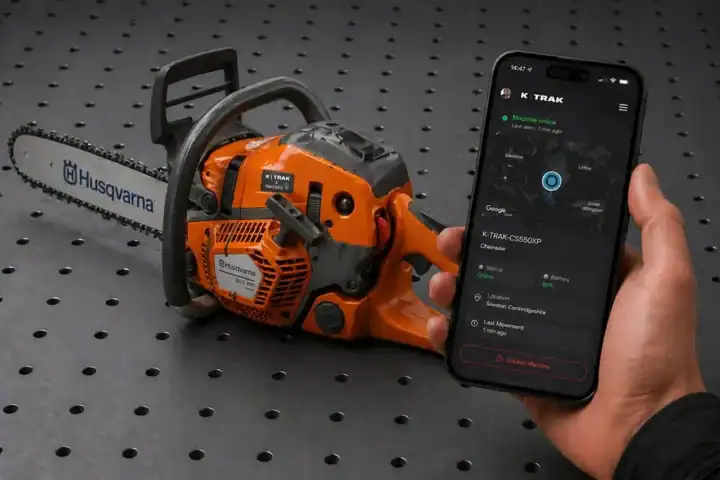
- K|TRAK GPS Tracking: https://kynekt.id/ktrak/
- Full Product Suite: https://kynekt.id/products/
Businesses in sectors such as construction, plant hire and facilities management often combine inventory records with GPS tracking to improve both operational control and theft recovery.
Real-World Example
Business Without Proper Inventory
A contractor loses £15,000 of tools from a stolen van.
They spend days rebuilding records from memory, searching emails and estimating values.
The insurer requests more evidence. Several items are challenged. Payout is delayed.
Business With Proper Inventory
A contractor loses £15,000 of tools from a stolen van.
They export a full digital inventory in minutes containing:
- Itemised list
- Values
- Serials
- Photos
- Proof of ownership
Claim submission is significantly cleaner and faster.
Insurance Inventory Readiness Checklist
| Question | Risk If No |
|---|---|
| Do you have a full equipment inventory list? | High |
| Are serial numbers recorded? | High |
| Are receipts stored centrally? | High |
| Are photos linked to each asset? | Medium |
| Can you export your inventory quickly? | Medium |
| Do you track asset allocation? | Medium |
Frequently Asked Questions
Do I need a tool inventory for an insurance claim?
Most insurers require proof of ownership and evidence of loss. A structured inventory is the most efficient way to provide this.
What proof of ownership do insurers need for tools?
Typically receipts, invoices, serial numbers, photos and asset records.
Can I use a spreadsheet for insurance inventory?
Yes, but spreadsheets are harder to maintain and weaker for storing evidence. Dedicated inventory systems are more robust.
What is the best way to keep an equipment inventory list?
Use a digital inventory platform with document storage, audit trails and mobile access.
Final Thoughts
Insurance is only as strong as the evidence behind your claim.
If you cannot prove what you owned, your insurer has every reason to challenge or delay payout.
Most businesses do not realise their inventory process is inadequate until something goes wrong.
Fixing it before a loss happens is significantly easier.
Download the App
Start building your insurance-ready asset register today.
Download the app: https://kynekt.id/download-app/
Sources
[1] https://www.aviva.co.uk/insurance/business-products/business-insurance/claims/
[2] https://www.directlineforbusiness.co.uk/business-insurance/tools-insurance
[3] https://www.abi.org.uk/news/news-articles/2024/8/fraudulent-claims-detected-by-insurers-top-1bn/
[4] https://www.gov.uk/report-tool-or-equipment-theft