

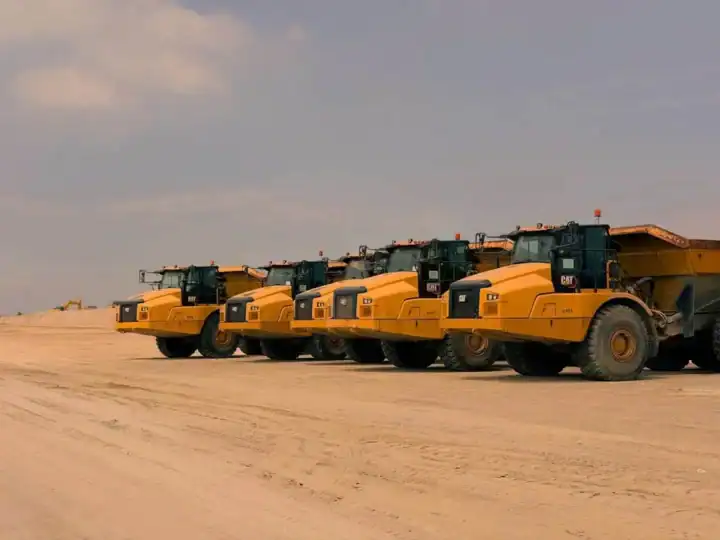
Most plant hire businesses assume lost profit comes from damaged equipment, idle machinery or underutilisation.
In reality, a surprising amount of margin disappears through something less obvious, equipment nobody can account for properly.
Sometimes it is stolen. Sometimes it is misplaced. Sometimes it is sat on the wrong site for two extra weeks because nobody realised it had not been returned.
Whatever the cause, missing equipment creates a silent drain on profitability for plant hire firms across the UK.
Missing Equipment Is More Than a Theft Problem
When plant goes missing, many operators immediately think theft.
But in practice, plenty of losses come from internal process failures such as:
- Poor return logging
n- Assets left on customer sites - Incorrect depot transfers
- Subcontractor confusion
- Weak handover procedures
For growing plant hire companies, these small failures compound quickly.
The Financial Impact Adds Up Fast
Missing equipment affects profitability in several ways.
Lost Revenue
You cannot hire out what you cannot find.
Duplicate Purchases
Businesses often rebuy equipment they already own because nobody can locate it.
Delayed Jobs and Collections
Teams waste time chasing equipment instead of servicing customers.
Reduced Utilisation Rates
Equipment appears underutilised on paper when in reality it is simply untracked.
Why Manual Tracking Breaks Down
Many plant hire firms still rely on whiteboards, spreadsheets or depot memory.
That may work when managing a small fleet.
Once you have multiple depots, drivers, subcontractors or customer sites, manual systems begin to break down.
Records drift. Communication gaps appear. Accountability weakens.
What Better Plant Hire Operators Do Differently
More efficient operators use digital systems to track:
- What assets they own
- Where each asset currently is
- Who has signed for it
- Expected return dates
- Maintenance/service history
- GPS location for key assets
This improves both profitability and customer service.[1]
GPS Tracking Is Particularly Valuable in Plant Hire
For higher-value hired assets, GPS tracking adds another layer of control.
It helps businesses:
- Confirm asset location
- Verify return/collection claims
- Detect unauthorised movement
- Recover stolen equipment faster
- Improve utilisation analysis
This is particularly useful for mobile plant, trailers and frequently hired machinery.[2]
How KYNEKT Helps Plant Hire Firms Improve Control
KYNEKT gives plant hire businesses structured asset visibility across inventory and tracking.
Relevant solutions include:
- KYNEKT Inventory App for live equipment registers
- KYNEKT ID App for ownership and verification records
- K|TRAK for GPS tracking of hired assets and machinery
- KYNEKT Product Suite for complete plant control workflows
This helps reduce lost equipment, improve accountability and protect margins.
Frequently Asked Questions
Why do plant hire firms lose equipment?
Usually through a mix of theft, poor tracking, process failures and weak accountability.
Is GPS tracking worth it for plant hire assets?
Yes, particularly for higher-value or frequently moved hired equipment.
How can plant hire firms improve utilisation?
Better visibility, live tracking and structured allocation processes all improve utilisation rates.
Final Thoughts
Missing equipment is one of the most overlooked profit leaks in plant hire.
The issue is not always theft.
Often, it is simply poor visibility.
The businesses with the strongest margins are usually the ones who know exactly what they own and where it is.
Download the App
Improve plant hire asset control with KYNEKT.
Download the app: https://kynekt.id/download-app/
Sources
[1] https://www.ibm.com/topics/asset-management
[2] https://www.trackplot.co.uk/gps-tracking-for-plant-machinery/
[3] https://www.cpa.uk.net/plant-hire-industry-statistics/
[4] https://www.rhinoplant.co.uk/blog/plant-hire-management-tips/
[5] https://www.mrpeasy.com/blog/asset-management-system/
[6] https://www.teletracnavman.co.uk/resources/blog/asset-utilisation