

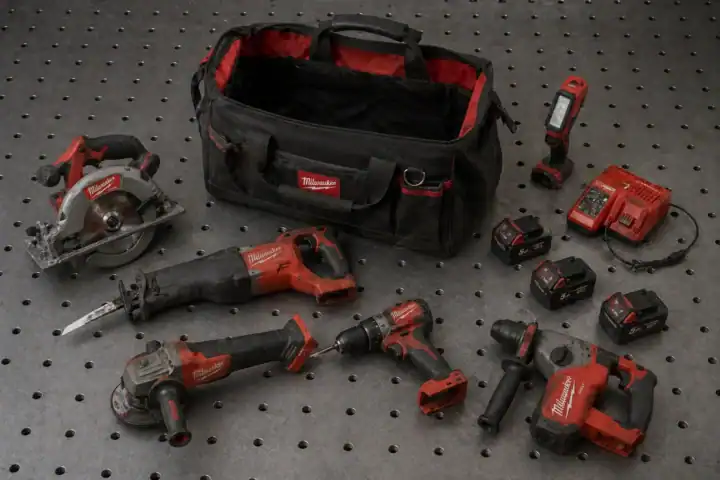
Ask most trades business owners whether they know exactly where every piece of equipment is right now, and the honest answer is usually no.
They know roughly where things should be.
But exact visibility? Not often.
That lack of control is more common than many owners admit, and it creates operational drag long before it creates a theft problem.
Equipment Does Not Need to Be Stolen to Cost You Money
When businesses lose track of equipment, the issue is often not outright theft.
More commonly, equipment is:
- Left on the wrong site
- Sitting in the wrong van
- Borrowed between teams without logging
- Stored in temporary locations and forgotten
- Marked as missing when it is simply unaccounted for
For busy builders, electricians and multi-team construction companies, these small visibility gaps happen constantly.
Why It Happens
Most growing trades businesses reach a point where informal systems stop working.
Memory, trust and WhatsApp messages are fine when there are two vans and one team.
They fail when you have:
- Multiple crews
- Shared equipment pools
- Several active sites
- Temporary subcontractors
- Frequent equipment movement
At that stage, businesses outgrow informal tracking whether they realise it or not.[1]
The Hidden Cost of Poor Visibility
Poor equipment visibility creates more cost than many owners expect.
It leads to:
- Duplicate purchases
- Lost time searching for tools
- Delayed jobs
- Poor staff accountability
- Unnecessary hire costs
- Higher loss and damage rates
Individually these feel minor. Collectively they become expensive operational leakage.[2]
Why Spreadsheets Often Fail
A spreadsheet sounds organised in theory.
In practice, it only works if people update it consistently.
Once equipment starts moving daily, spreadsheets usually become outdated almost immediately.
That is why many businesses think they have a tracking system when in reality they have a historical record of where things used to be.
Better Visibility Starts With Better Systems
Businesses with strong equipment control usually have:
- A live digital asset register
- Clear allocation records
- Site/vehicle assignment tracking
- Audit processes
- GPS tracking on higher-risk assets where appropriate
This creates accountability and visibility without relying on memory.[3][4]
How KYNEKT Helps Businesses Stay in Control
KYNEKT gives trades businesses structured visibility across tools, equipment and assets.
Relevant solutions include:
- KYNEKT Inventory App for digital asset registers
- KYNEKT ID App for ownership and registration records
- K|TRAK for GPS tracking of high-value assets
- KYNEKT Product Suite for connected asset visibility workflows
This makes it easier to know what you own, where it is, and who has it.
Frequently Asked Questions
Why do trades businesses lose track of equipment?
Usually because assets move frequently without structured logging or visibility systems.
Is equipment loss always theft?
No. A large percentage of “missing” equipment is misplaced, unlogged or sitting in the wrong location.
How do businesses improve equipment visibility?
By implementing digital registers, allocation tracking and stronger movement controls.
Final Thoughts
Most equipment visibility problems are process problems, not theft problems.
Businesses do not lose control because equipment vanishes.
They lose control because movement outpaces the systems tracking it.
Download the App
Improve your equipment visibility with KYNEKT.
Download the app: https://kynekt.id/download-app/
Sources
[1] https://www.ibm.com/topics/asset-management
[2] https://www.mrpeasy.com/blog/asset-management-system/
[3] https://www.sap.com/uk/products/scm/eam/what-is-enterprise-asset-management.html
[4] https://www.clickmaint.com/blog/asset-management-best-practices