

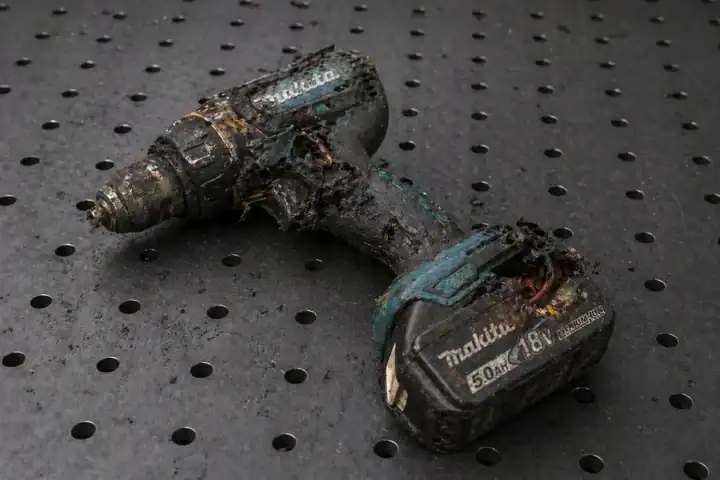
When theft, fire or major loss hits a business, most owners focus on the immediate damage first.
Then the insurer asks for documentation.
That is where many businesses hit a second crisis.
They know what they owned broadly, but producing a complete, accurate, insurer-ready equipment list quickly is another matter entirely.
What Do Insurers Need After Tools Are Stolen or Lost?
Most insurers require detailed evidence before paying out on stolen, damaged or destroyed business equipment claims.
Typical requirements include:
- Itemised equipment inventory list
- Serial numbers and identifiers
- Purchase receipts or invoices
- Estimated or evidenced values
- Proof of ownership
- Supporting photographs
- Crime/incident reference numbers where relevant
Without this, claims often slow down significantly or face additional scrutiny.[1]
Why Businesses Struggle to Produce Equipment Lists Quickly
The issue is rarely lack of ownership.
It is fragmented records.
Most businesses store asset information across:
- Email inboxes
- Accounting systems
- Shared drives
- Phones
- Paper files
- Spreadsheets
- Staff memory
When urgent reporting is needed, gathering everything becomes a project.
Why Speed Matters During a Claim
Producing a full inventory quickly helps businesses:
- Submit claims faster
- Reduce disputes and clarification requests
- Accelerate insurer validation
- Replace equipment sooner
- Minimise downtime and disruption
Operational downtime often becomes more expensive than the theft itself.
What an Insurance-Ready Equipment List Should Include
| Inventory Field | Why It Matters |
|---|---|
| Asset Name | Identifies the item |
| Make/Model | Supports validation |
| Serial Number | Confirms legitimacy |
| Purchase Date | Helps value assessment |
| Purchase Cost | Supports claim value |
| Assigned User | Accountability and verification |
| Current Location | Operational context |
| Photo Evidence | Visual proof |
| Linked Invoice | Ownership verification |
Why Manual Systems Break Under Pressure
A spreadsheet may look sufficient until you need it urgently.
Common problems include:
- Missing data fields
- Outdated records
- No document attachments
- No mobile access
- No audit trail
- No quick export functionality
This is why many businesses move from spreadsheets to dedicated business asset inventory systems.
How KYNEKT Makes Insurance Reporting Faster
KYNEKT helps businesses maintain insurer-ready records at all times.
Relevant solutions include:
- KYNEKT Inventory App for full equipment inventory management
- KYNEKT ID App for ownership verification and registration
- K|TRAK for GPS tracking of high-value equipment
- KYNEKT Product Suite for integrated asset management workflows
This enables businesses to export full equipment records quickly when needed.
Businesses That Benefit Most From Fast Inventory Reporting
This is particularly valuable for:
Frequently Asked Questions
What do insurers need after tools are stolen or lost?
Usually an itemised inventory, proof of ownership, values, serial numbers and incident documentation.
How should I store my tool inventory records?
Use a digital inventory platform with cloud/mobile access, document storage and export functionality.
Can I use a spreadsheet for insurance inventory?
Yes, but spreadsheets often fail when speed, accuracy and documentation are critical.
Final Thoughts
The time to organise your inventory is before something goes wrong.
If producing a full insurer-ready equipment list would take your business hours or days today, your process is not robust enough.
The businesses that recover fastest are usually the ones who prepared first.
Download the App
Build your insurance-ready equipment inventory with KYNEKT.
Download the app: https://kynekt.id/download-app/
Sources
[1] https://www.aviva.co.uk/insurance/business-products/business-insurance/claims/
[2] https://www.directlineforbusiness.co.uk/business-insurance/tools-insurance
[3] https://www.abi.org.uk/products-and-issues/topics-and-issues/claims/
[4] https://www.gov.uk/report-tool-or-equipment-theft
[5] https://www.fmb.org.uk/resource/construction-sector-loses-millions-to-tool-theft.html